
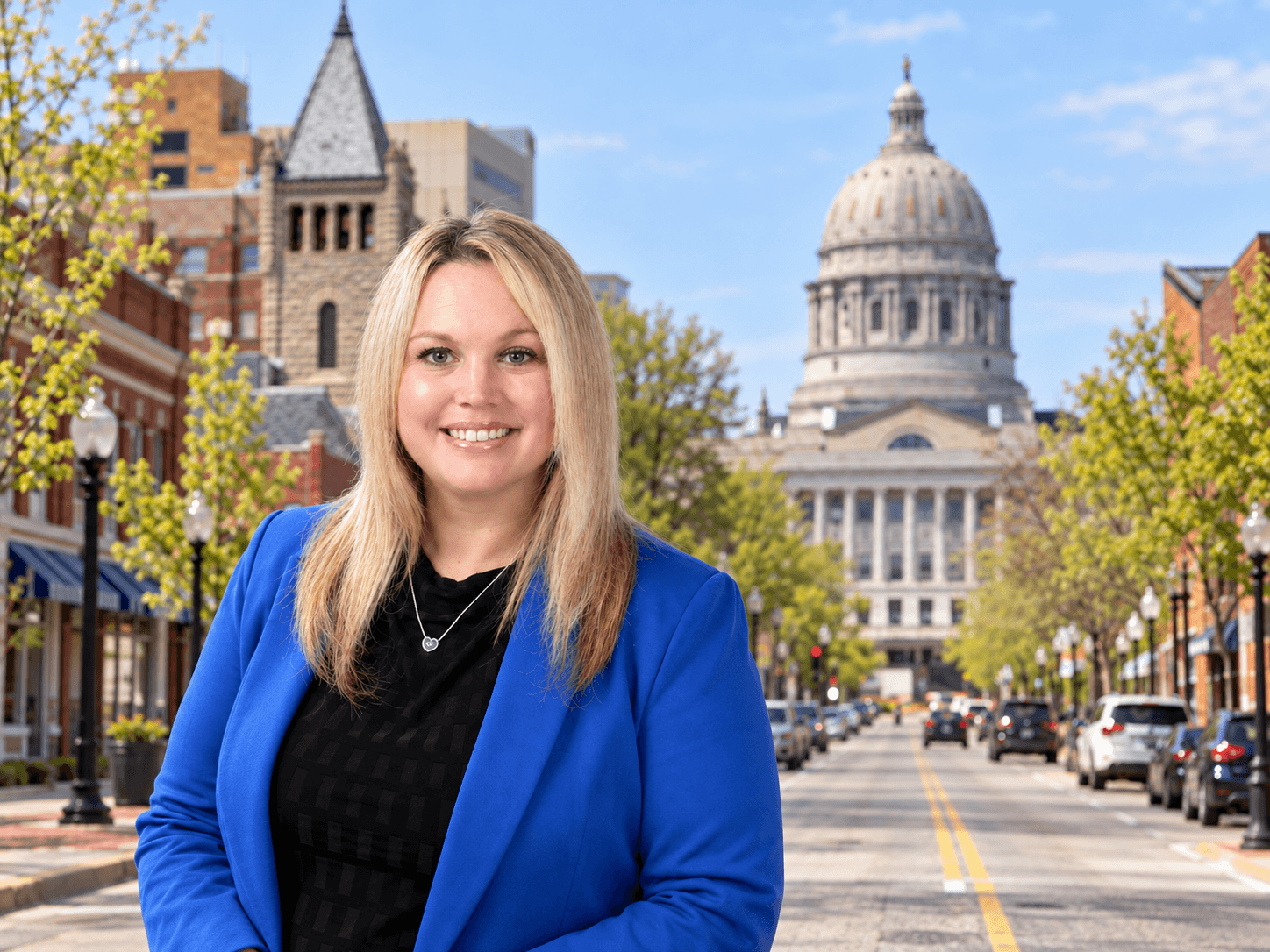
East Capitol Avenue in Jefferson City has reached a tipping point for private investment, according to Missouri Chamber of Commerce and Industry President and CEO Kara Corches. The Chamber is backing that assessment with a major renovation of its longtime headquarters.
Speaking on Wake Up Jeff City, Corches said investment along the corridor is building confidence among businesses. The question, in her view, may no longer be who is willing to go first.
“There is critical mass now,” Corches said during an interview on Wake Up Jeff City. “We’ve reached that tipping point on Capitol Avenue.”
“If you’re going to pick a time to invest, the time to invest is now.”
The Missouri Chamber is making that bet itself, choosing to remain on East Capitol Avenue rather than move elsewhere.
Why the Missouri Chamber is staying on East Capitol Avenue
The organization is in the middle of a major transformation of its longtime headquarters at 428 E. Capitol Ave., where the Chamber has been located since 1977. The organization temporarily moved to Madison Street during construction and expects to return in summer 2027.
Corches said the Chamber did consider leaving East Capitol.
“We absolutely explored that idea initially,” she said.
Instead, the organization chose to stay near the Missouri State Capitol and Governor’s Mansion and become part of the redevelopment already underway around it.
The immediate reason for taking a hard look at the building was considerably less glamorous: plumbing.
Corches said significant infrastructure problems in the aging headquarters forced the organization to consider what needed to be done. But rather than simply repair the problems, its board began looking decades ahead.
The result is a top-to-bottom transformation of the East Capitol Avenue headquarters.
The Chamber’s Building Tomorrow project is planned to include an entire floor of workspace and private offices for Chamber members visiting Jefferson City, an event center capable of holding more than 230 people and a rooftop terrace overlooking the Capitol, Governor’s Mansion and, on a clear day, the Missouri River. The Chamber says construction is expected to be finished in summer 2027.
The renovation gives East Capitol Avenue another destination for business meetings and events. Whether it helps attract investment to surrounding properties is the larger test.

Can East Capitol Avenue in Jefferson City build on its momentum?
Corches pointed to several investments already underway or completed along East Capitol Avenue, including Ivy Terrace and the Missouri Association of Counties, along with the planned convention center nearby.
Her argument is that development can become self-reinforcing.
“In economic development, momentum builds momentum,” Corches said.
Once investors see other projects moving forward, she said, they gain more confidence that their own investment will hold value.
That gets at one of the central questions surrounding Jefferson City’s redevelopment push: what makes a project viable? Related reporting on Jefferson City’s rising housing construction costs examines another part of that challenge.
Government can build infrastructure. Officials can approve projects. Renderings can show what an area might eventually look like.
Private investors still have to believe it.
Corches believes Jefferson City may finally be reaching that point.
She said other state capitals often have a Capitol Avenue that functions as a destination in its own right, surrounded by restaurants, retail, professional offices and other activity tied to state government.
Jefferson City, in her view, has an opportunity to do more with an advantage it already possesses.
“We are the center of state government in Missouri,” Corches said.
She said Jefferson City should become a place visitors want to return to rather than somewhere they visit once on a school trip.
That will require more than renovated buildings.
Public safety and permitting shape the corridor’s future
Corches specifically brought up public safety, saying visitors and businesses need to feel safe along a key corridor if Jefferson City wants people to spend more time there.
She also said the city deserves credit for something businesses often complain about elsewhere: the regulatory process.
Corches praised Jefferson City officials for being receptive to development and said the city has worked to prevent permitting and regulatory processes from unnecessarily delaying projects.
Corches offered Jefferson City as an example other communities could learn from.
Where should government stop?
That raised the larger question of how far government should go in trying to create redevelopment.
Corches drew the line at creating the conditions for investment rather than trying to make business decisions itself.
“I think government’s job really should just be removing barriers so that private investors can make those investments,” she said.
Her phrase was simple: “Let business decide.”
That distinction will become increasingly important as Jefferson City pours public resources into major projects around the Capitol.
For East Capitol Avenue, the measure of success cannot simply be whether the public projects get built.
It will be whether private money follows them.
Do businesses open?
Do vacant or underused properties become attractive investments?
Do more visitors stay after their business at the Capitol is finished?
Does East Capitol become a place people deliberately go rather than simply drive through?
What success on East Capitol Avenue would look like
Her five-year vision is a Capitol Avenue with more people on the sidewalks, more restaurants and retail, more organizations locating there and visitors deciding Jefferson City is worth another trip.
She called the potential end result a “crown jewel for Jefferson City.”
That is the optimistic case.
And after years of plans, preservation fights, public projects and promises surrounding East Capitol, it is also something Jefferson City will eventually be able to measure.
The Missouri Chamber has already made its decision. It could have left; instead, it is investing in the same corridor Corches is encouraging others to consider.
Now we find out whether that momentum really does build more momentum.
Leave a Reply