
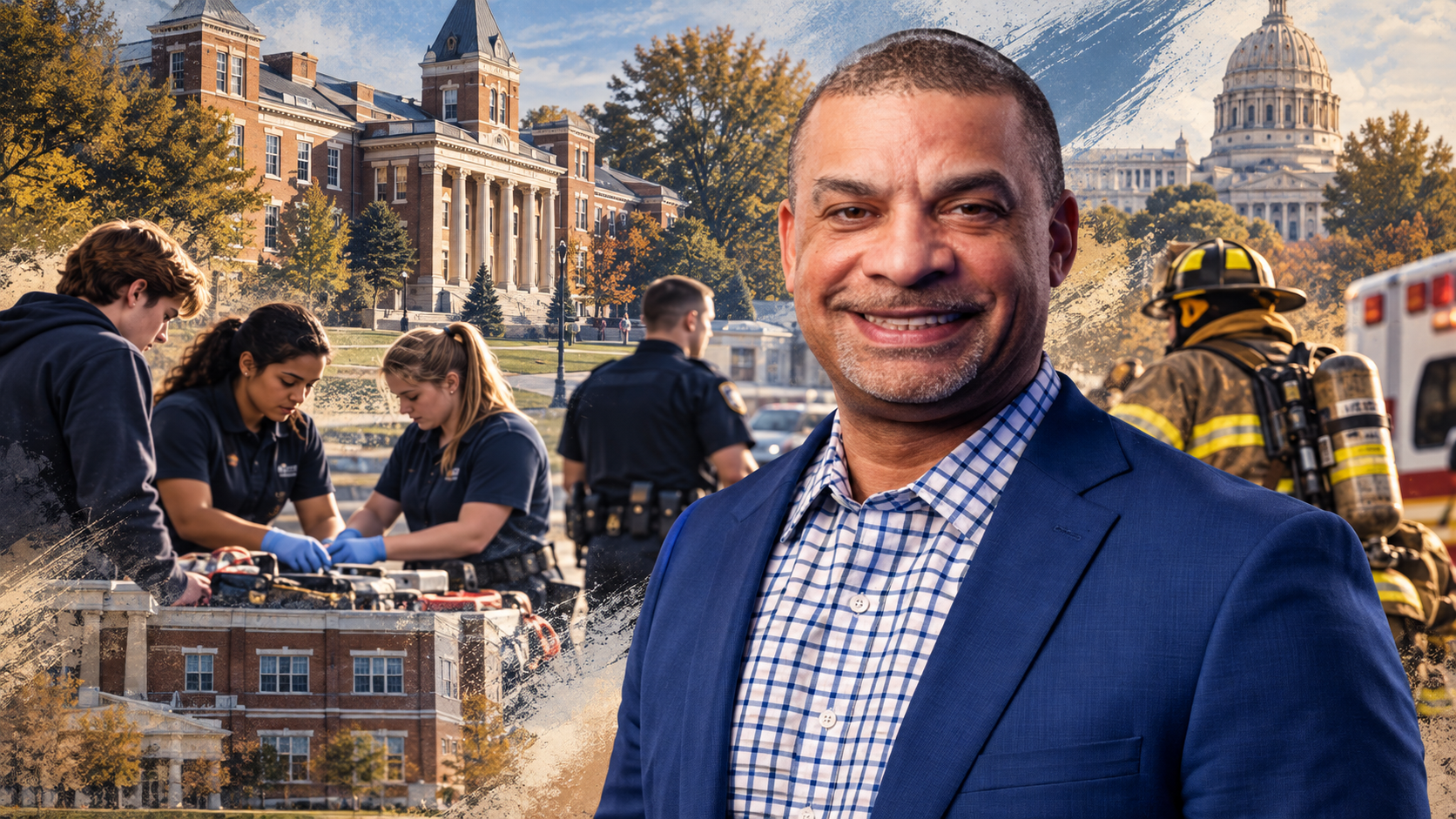
Lincoln University and several Jefferson City-area public-safety agencies are trying a different approach to a familiar workforce problem: instead of competing for the same recruits, introduce young people to several emergency-service careers at once and build a larger pipeline.
That effort now includes Explorer Post 6265, a Scouting America program sponsored by Lincoln University’s Security Sciences Institute and supported by the Jefferson City Police Department, Jefferson City Fire Department, Cole County EMS and the Missouri Department of Public Safety. The post was officially chartered Sept. 21. Lincoln University’s Explorer Post 6265 charter announcement
Dr. Darius Watson, dean of Lincoln’s College of Professional Studies and assistant provost for workforce development, said during an interview on Wake Up Jeff City that the goal is larger than giving young people a tour of a police or fire station.
The idea behind Explorer Post 6265 is to expose them to the actual work, the skills involved and career paths they may not know exist.
“Just because you’re going to the fire department doesn’t mean that you’re always going to be a fireman climbing up the ladder,” Watson said. He pointed to administrative, forensic and other specialized roles as examples of careers young people may never consider until somebody shows them they exist.
Table of Contents
Explorer Post 6265 gives students hands-on public safety experience
Scouting America describes Exploring as a hands-on career education program for young people through age 20, designed to connect participants with mentors, agencies and real-world work environments. Scouting America Exploring
That model is already visible in Jefferson City through Explorer Post 6265.
Watson said participating agencies rotate through programming with students. Police have introduced participants to building-clearing techniques. Fire training has included hydrants, hoses and protective equipment. EMS programming has included wound care, first aid and CPR, with students in last year’s pilot receiving first-aid and CPR certification.
Lincoln says future experiences may also include department tours, ride-alongs, emergency-response simulations, court and criminal-law exposure, fire and rescue operations, and leadership development. Explorer Post training and activities
Explorer Post 6265 meets on the first and third Thursday of each month at 5:30 p.m. at the Jefferson City Fire Department Training Center on Hyde Park Road. Explorer Post 6265 meeting schedule
The hands-on piece of Explorer Post 6265 matters because exposure can help a young person figure out not only what career they want, but what they do not want.
Watson recalled an EMT student who performed well academically but discovered during clinical ride-alongs, after encountering a serious crash casualty, that the work was not the right fit.
That kind of realization before someone spends years pursuing the wrong career is part of the value of career exploration.
Jefferson City Police is recruiting now
The workforce problem behind the program is not theoretical.
The Jefferson City Police Department is currently advertising immediate openings for police officers and communications operators. The department offers a $15,000 sign-on bonus for commissioned officers and says selected applicants who do not already hold a Missouri Peace Officer License can be sent through the police academy at city expense. JCPD officer recruitment and benefits
That makes Watson’s broader point more concrete.
Public-safety agencies already maintain their own recruiting efforts. But Watson said one problem may be that those agencies have historically ended up pursuing many of the same people.
“One of the things that maybe negatively impacted those efforts in the past was the degree to which they may have even implicitly seen themselves as competitors for those recruitment efforts,” Watson said.
Instead of convincing the same student to choose police over fire, Watson wants Lincoln to help expose that student to a broader public-safety ecosystem.
Cybersecurity, for example, matters to police, emergency management and other public agencies. Geographic information systems can matter in emergency response, EMS and disaster management. Those careers do not always fit neatly inside one traditional agency silo.
Watson said integrating those disciplines could expand the overall recruiting pool instead of simply dividing it among agencies.
That may be the most important idea behind Explorer Post 6265.
A successful youth program is useful.
A program that eventually produces trained workers for Jefferson City and Cole County would be something more.
Lincoln University Security Sciences Institute is trying to build multiple entry points
Explorer Post 6265 is only one part of Lincoln’s broader strategy.
The Lincoln University Security Sciences Institute currently offers certificate programs in cybersecurity, emergency medical services, geographic information systems and mental health for first responders. Lincoln also operates its Law Enforcement Training Academy. Lincoln University’s public-safety training overview
Watson said Lincoln is trying to create multiple entry points rather than requiring everyone to follow the same four-year degree path.
A student could encounter public-safety careers through Explorer Post 6265, move into certificate training, enter the workforce and later return for additional education if that makes sense.
There are also financial supports available farther down that pipeline.
Eligible public-safety personnel and dependents pursuing Lincoln’s EMT certificate or law-enforcement training may qualify for Missouri’s Public Safety Recruitment and Retention Scholarship, which can help cover tuition and fees. Public Safety Recruitment and Retention Scholarship details
Lincoln’s Law Enforcement Training Academy also advertises the Missouri Blue Scholarship, which can provide up to $5,000 toward basic academy training for eligible non-sponsored recruits. Missouri Blue Scholarship and academy resources
Those programs do not solve recruitment by themselves, but they show that the pipeline extends beyond simply getting a teenager interested in the work.
Cybersecurity center and 2027 emergency exercise remain works in progress
Watson also discussed several larger Security Sciences projects that are not yet complete.
He said he is working with representatives from the State Emergency Management Agency and Missouri’s Office of Homeland Security to explore establishing a cybersecurity operations center inside Lincoln’s new facility.
The idea, according to Watson, would be to connect real cybersecurity services with internships, training and certification opportunities for students.
That project remains exploratory.
Watson also wants to stage a larger emergency-response exercise involving public agencies, Lincoln students and community organizations.
Summer 2027 is the goal, but Watson was careful not to call that date final. He said he likely will not know whether that timeline is firm until January or February, after funding, facility availability and agency participation are confirmed.
That distinction matters.
Some pieces of Lincoln’s public-safety strategy are operating today. Others remain plans.
Explorer Post 6265 is already underway.
Now comes the measurable part.
How many participants move from Explorer Post 6265 into Lincoln training, certification programs or internships?
How many eventually take jobs with Jefferson City Police, Jefferson City Fire, Cole County EMS or other public-safety agencies?
That is the difference between a successful youth program and a successful workforce pipeline.
Leave a Reply