
By Regular Guy Guns | Guest Author
Regular Guy Guns reflects on Jeff Cooper, the armed citizen, and three questions: where freedom comes from, whether rights outlast governments, and what it means to resist tyranny.
Lieutenant Colonel Jeff Cooper, USMC, was a wise man. Simple and direct, he coalesced and developed the modern theories and practices of firearms handling and usage. Very accomplished, he helped develop the Bren Ten 10mm pistol of Miami Vice fame, and founded the Gunsite Academy, the pioneer of modern firearms training schools. He was also a very quotable gentleman…
A favorite of mine is, (of course!):
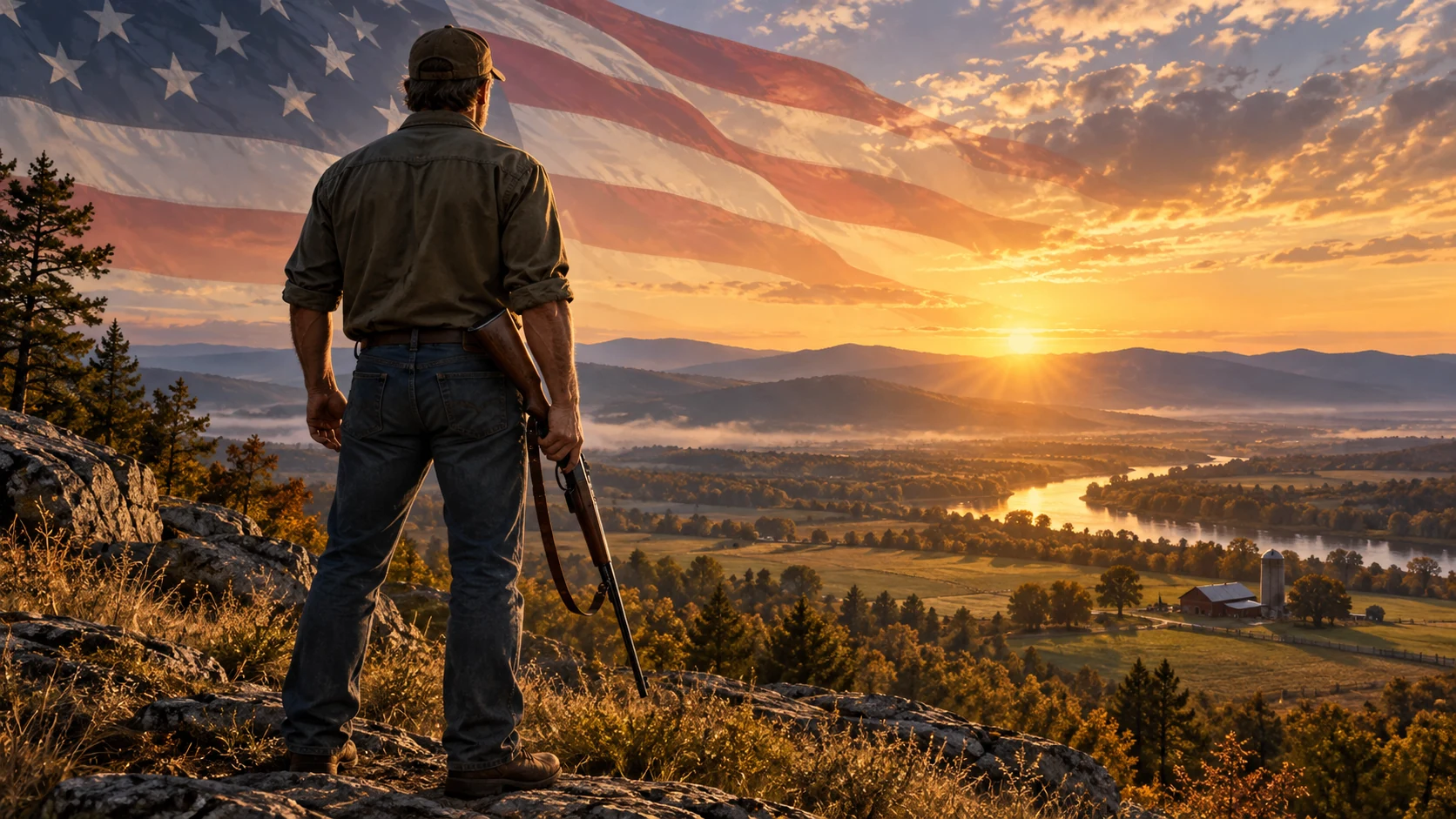
“Pick Up A Rifle And You Change Instantly From A Subject To A Citizen” – Lt. Col. Jeff Cooper, USMC – 1920-2006
Truer words have never been spoken.
In this article
From a Subject to a Citizen: Freedom Isn’t Something the Government Grants You
Every so often, noted think tank The Cato Institute publishes the Human Freedom Index. We’re never at the top, by the way. It factors in the overall level of “freedom” in a nation at a given moment. It also factors in crime and poverty, and so on. However, worth noting is that the HFI is only a snapshot, something MSM journalists conveniently ignore. 2026’s top dog isn’t going to be 2027’s winner, and so on. Objectively it seems to be more of a “privileges doled out” ranking, than anything.
However, worth considering is that the HFI only considers the raw levels of what they define as freedom, not the intricacies. If one looks closely at the report, one will see that the 14 other nations above the United States all have a massive (proportionate to their size) bureaucratic and legalistic complexities. The laws in place grant privileges to their people, but they don’t acknowledge freedom in any meaningful way.
New Zealand allows LGBT folk to marry, for example, but it’s really only at the pleasure of the government – it’s not an acknowledgement of a viewed inherent right to do so. In other words, the NZ government could flip from its current “kumbaya” state to a reactionary fundamentalist regime, and, boom, no more gay marriage, as it’s not enshrined as a negative right.
And there isn’t much that the New Zealanders could do about it. Yes, they have guns, but the government down there has a fair idea of who has what. A registry is a shopping list of guns that the government wants to confiscate later. Prior to any brash action of suppressing the people, the first thing a rabid Kiwi government will do is attempt to confiscate the civilian inventory.
So, their so-called freedom exists at the pleasure of the Crown – the government, basically. The report doesn’t dive to the level of whether the people can guarantee their freedom.
Governments Come And Go, Inherent Rights Do Not
We are born with the inherent right to self defense by any means we deem necessary. Governments around the world recognize or suppress the right to varying degrees through legislation, social conditioning, and outright violence. Yes, each and every law out there is backed up by a death threat. “Do this, or else!” is the mantra of Big Government.
Now I’m not arguing for no laws, just a simplification – the “basic law” should be “Don’t hurt people unless they hurt you first and don’t take their stuff”. Beyond that it’s all just power flexes and money grabs.
However, the United States is unique in that our founding document acknowledges several inherent rights – the right to keep and bear arms, the right to speak our minds, the right to privacy (looking at you, Flock-ites), and so forth. Other countries have so-called Bills of Rights, but they are rife with explicit exemptions. For example, Mexico’s Article 10 claims to acknowledge the people’s right to keep and bear arms, but the same paragraph explicitly grants the government power to regulate that right, turning it into a privilege.
Our rights don’t change, even if governments do. Our founding fathers realized that, and codified and acknowledged those rights as a bulwark against the fleeting nature of electoral cycles and governments. Essentially our government changes every 4 to 8 years. Other nations, even more frequently, for the better or for the worse. How often do we hear of a “snap election” in Europe, for example?
Venezuela was a prime example. The 1980s and early 1990s were amongst the most prosperous they had seen in modern history, due to the oil boom. The government was corrupt, sure, but no more so than any other government in South America. The right to keep and bear arms wasn’t acknowledged by the government, but getting a gun legally wasn’t too difficult, and if you were willing to flout the law, enforcement was lax at best.
However, the Chavistas changed that. They explicitly banned the private ownership of firearms, except for the Party faithful, and enforcement was frequent and brutal. The people lacked the means to fight back – especially since the military was and still is mostly loyal to the Chavistas. Maduro might be a guest of the US Government now, and Delcy might be cowed into submission by President Trump, but there’s obviously been no real movement on a “Second Amendment – Venezuela Edition”.
Ironically, it took the direct intervention of American gun guys to flip the script in Caracas.
In the social democracies of Europe, they are usually only a year or two away from totalitarianism, and there isn’t much the residents of those nations could do about it. Less than a century ago, most were hard dictatorships, or under the control of a hard dictatorship. It took a war, ironically at the cost of many American lives, to get them some semblance of freedom, and even then, it’s a gilded cage. Zookeeper authority.
In those nations, most legal firearms are registered, and the illegal ones are buried and not immediately accessible. Owners of said weapons have to be very careful about bringing them out from hiding. Again, the so-called citizens of Europe are subjects at best. They traded a monarchy for a soft dictatorship. One only need to look to the police forces of those nations. Most are armed to American levels, and some still maintain a gendarmerie, which is to say a branch of the military with an explicit jurisdiction in civil law enforcement.
If it’s such a peaceful and stable nation, why is the military given powers of domestic law enforcement? Why whenever a protest breaks out, are regular military units summoned?
Granted, such trends exist in the United States. Our law enforcement agencies are routinely equipped with military equipment, and the National Guard can be called up for domestic fighting if needed. It’s only that way because we let it happen, not because the government was initially set up that way.
We can fight back. We have 500 million (or more) privately-owned firearms in our inventory. From single-shot .22LR Cricket youth rifles all the way up to fully-armed fighter jets in private hands, the arsenal of the American people is vast.
The Armed Citizen: Americans Can Resist All the Way Up the Ladder
Real resistance means being able to back it up with force if needed. Whatever your opinion is of President Trump, the resistance to his presidency can be regarded as laughable at best. They call him a Nazi, while at the same time voting for people who wish to (at least at a faster rate than the norm) suppress the right to keep and bear arms. James Talarico re-affirmed his stance to push an assault weapons ban if elected to the Senate. Good luck with that – Viramontes is likely to derail the idea forever, by the way…
Anyway, let’s just say Trump gets home tonight after doing his solemn rounds for the 25th Anniversary of 9/11, hops on X, and decides someone like Hasan Piker or Acyn are annoying and irritating. Well, they are – but let’s just say President Trump got some unrelated bad news on the way home and he’s in an insanely epic pissy mood. He could order that both of them be conveniently “disappeared” – and there’s not a damn thing either of them would, or could do about it.
They’re not armed (Piker posed with an Airsoft weapon, not a real SBR), and their private security would be no real match for a planned assault by a rogue squad of government agents.
Those people are subjects, at best. They can’t effectively fight back if the government really wants them out of the way. No phone call, no letter, no nothing. They could be whisked away to a black site and the matter would fade away after a time. “Piker? Isn’t that like an insult in UK English?” – no one would care that he’s gone after six months.
In a hopefully-hypothetical government-gone-really-bad future, where the soapbox, ballot box, and jury box options have been exhausted, the armed citizen has the final option – the ammo box.
Sure, they can exercise “Irish Democracy” where they conduct themselves peaceably and morally, despite any laws, but at some point the government may come for them, and that’s where being armed comes in real handy.
An armed citizen can resist. They may lose, but they will go down fighting. Even a mere AR-15 changes the odds massively in favor of the citizen.
And the armed citizen who resists an immoral action by his or her government makes a lot of noise in the process. Neighbors will wonder about the barrage of gunfire, the noise, the ambulances, the bodies, and so forth. It’s hard to keep an armed citizen quiet, even if the government goes “police state”. Their death, if it happens, won’t be easily dismissed or unanswered. Armed citizens tend to hang out with other armed citizens. It could be the spark that starts the proverbial Mexican Hat Dance once and for all.
A real citizen loathes to exercise that final option, sure, but he or she will if they must.
Be a citizen. Do the memory of Lt. Col. Jeff Cooper proud. Arm yourself today. If you are armed, arm up some more.
Guest commentary by Regular Guy Guns. Read more at RegularGuyGuns.com.
Leave a Reply