
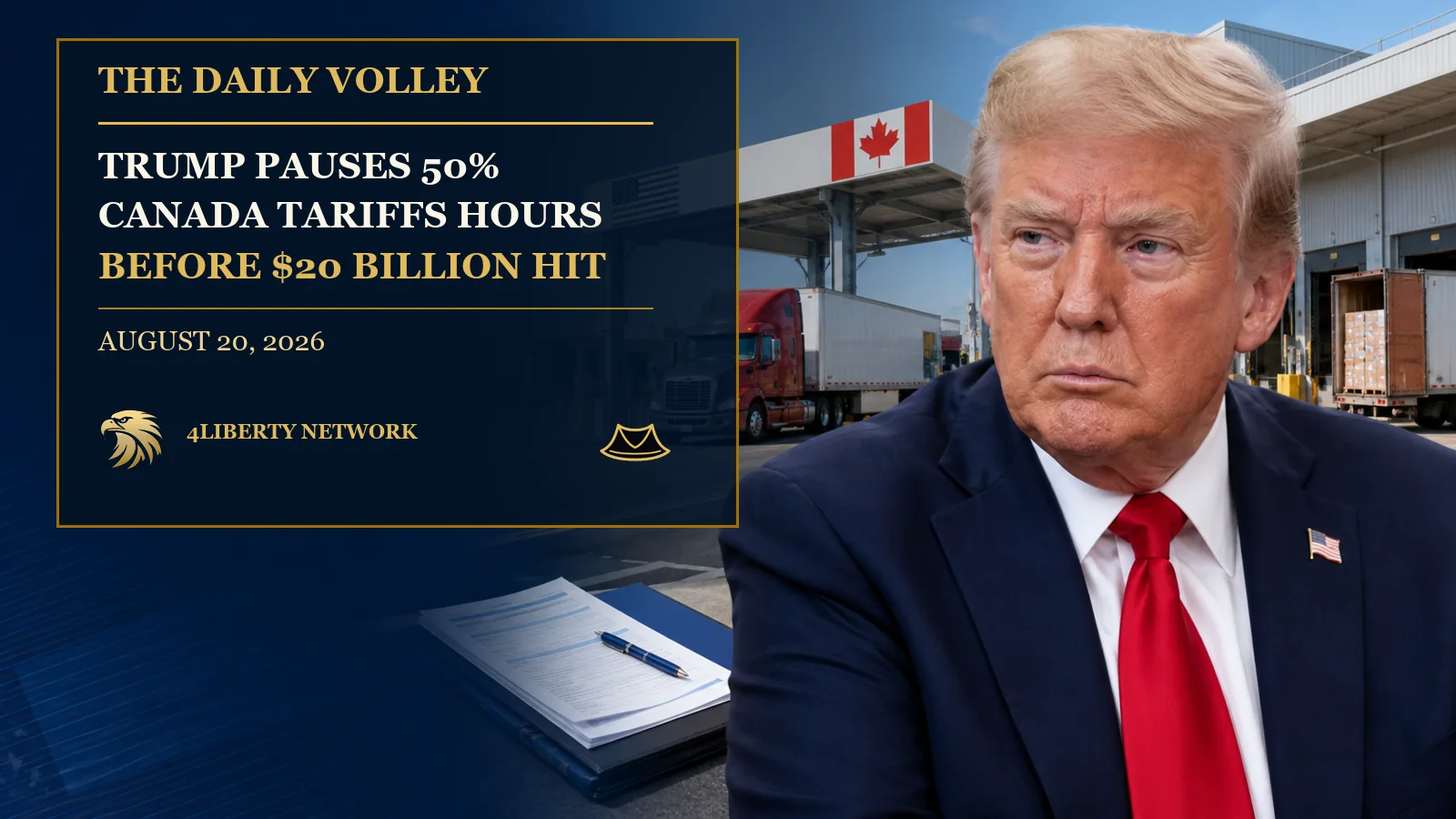
Trump Pauses 50% Canada Tariffs Hours Before $20 Billion Hit
Donald Trump paused 50% Canada tariffs on nearly $20 billion of goods less than two hours before they were scheduled to take effect.
The three-day reprieve moved the deadline to 12:01 a.m. Saturday. It covers products including Canadian wine, dairy, cars, cement and hockey equipment. Energy, potash and some goods already covered by other tariffs were excluded.
Trump wrote that the United States and Canada had a deal, but he also made the announcement “subject to the finalization of documents.” A senior Canadian official called the emerging terms favorable to Canada on Wednesday while cautioning that negotiations were not complete.
The mismatch leaves importers without a settled price. The White House proclamation set the 50% duty under Section 338 of the Tariff Act of 1930. U.S. importers would remit it when covered goods enter the country, then decide whether to absorb the cost, raise prices or cancel orders.
Trump says the threat won fair treatment for American farmers. Canada says its supply-management system remains protected. Neither government had released final documents by Wednesday night.
The two countries exchange about $880 billion in goods and services each year. The threatened products account for a fraction of that total, but factories and retailers still need a settled answer before Saturday’s deadline.
Washington Sanctions the ICC President
The United States sanctioned International Criminal Court President Tomoko Akane and senior trial lawyer Abdoulaye Seye on Tuesday.
The Treasury designation blocks property and financial interests under U.S. jurisdiction. Entry restrictions can also reach the two officials and their immediate families.
Secretary of State Marco Rubio says the court has no authority to prosecute Americans or Israelis because neither country joined the Rome Statute. The White House order calls ICC action against protected persons a threat to U.S. sovereignty and national security.
The ICC answered that financial coercion interferes with independent judicial work and accountability for grave crimes. Its judges and prosecutors say their authority comes from the Rome Statute and referrals made under it.
The jurisdictional split turns on consent. Washington rejects a tribunal’s power over nationals of nonmember countries. The court argues that crimes committed within its jurisdiction remain prosecutable regardless of the accused person’s nationality.
Missouri Watch
John Combest’s Wednesday roundup points to Missouri’s proposed A-F school grade cards.
The state framework combines student proficiency, academic growth and graduation outcomes. Schools also need at least 95% participation in state assessments to receive a grade.
Districts would receive embargoed results by September 15 and post them publicly by September 30. If 65% of schools eventually earn an A or B, the proposed scale would raise the thresholds by five percentage points the following year.
St. Louis Public Radio reports that supporters want parents to see a familiar measure of performance. Educators warn that one letter can hide poverty, disability, school resources and meaningful student growth. The first grades have not been released, and the State Board of Education still must act on the framework.
From the 4Liberty Network
Austin Petersen put an unexpected border question on Wake Up America: Could an October 19 Alberta ballot question begin a break with Canada and eventually make U.S. statehood a serious argument?
Alberta’s energy wealth and political friction with Ottawa give independence advocates something larger than a protest slogan. Statehood would raise a different set of questions about representation, federal power, natural resources and whether either country would consent.
The first political fight belongs to Albertans deciding how much authority Ottawa should hold over their province.
Going Viral
MEME THE LEFT fires through a quick edited reel that jumps from Caitlin Clark and celebrity headlines to compelled-language jokes and a Chili’s sign that nearly writes its own punch line.