
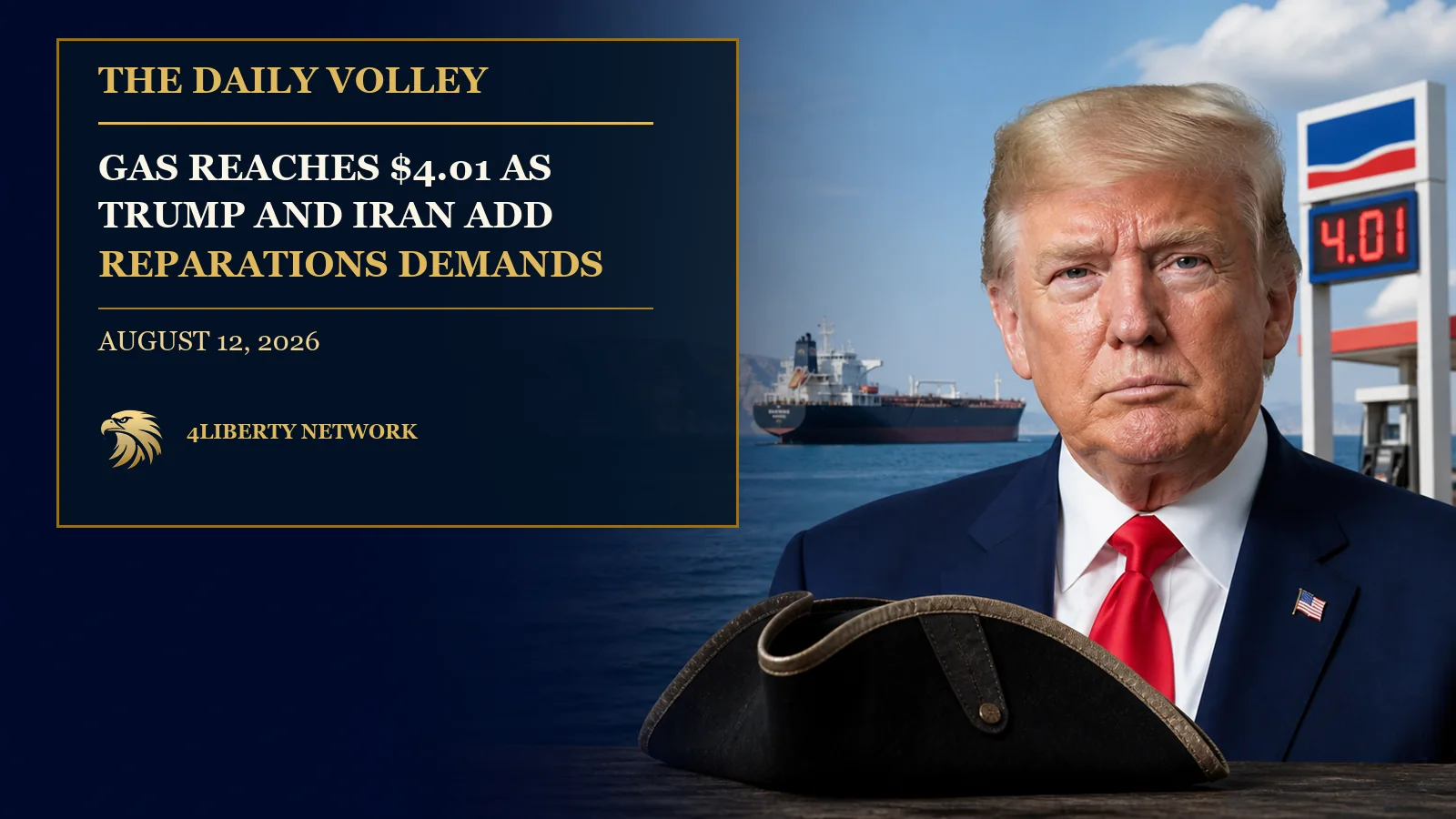
The national average price for regular gasoline reached **$4.01** Tuesday as President Donald Trump and Iran added competing compensation demands to stalled talks over reopening the Strait of Hormuz.
Trump said he instructed U.S. representatives to seek compensation from Iran for Americans killed or wounded by Iran-backed forces and for the families of Iranian protesters. Iranian Foreign Minister Abbas Araghchi rejected the demand and said Tehran would not reopen the strait until Washington met Iran’s conditions.
The dispute puts a new price on negotiations that already carry a household cost. The Associated Press reported that Brent crude settled at $87.61 a barrel and West Texas Intermediate at $82.19. AP said oil had risen about 7.5 percent since Trump’s latest comments.
Both sides now want compensation
Iran has demanded that the United States end its blockade, lift sanctions, release frozen Iranian assets and pay for damage from the war. Trump rejected Iran’s reparations demand Monday, then added a U.S. compensation demand to future talks.
The AP report on the competing demands says Trump wants Iran to compensate the families of Americans killed by Iran-backed groups, Americans wounded by those groups and families of Iranian protesters.
Those categories do not yet amount to an agreement, a payment schedule or a signed proposal. AP reported that Trump announced the demand on social media. No public negotiating text establishing amounts, eligible cases or an enforcement method accompanied it.
Iran’s conditions are also broader than a payment demand. Tehran says the Strait of Hormuz will remain closed until the blockade ends and the other conditions are met. The strait carried roughly one-fifth of the world’s traded oil before the war.
The shipping route remains effectively closed
The United States says its blockade controls which ships may enter or leave Iranian ports. Iran says it will not restore ordinary passage through Hormuz without a deal.
Trump described the U.S. position in a July interview highlighted by the White House. He said the United States controlled the blockade and decided which ships could pass. That statement documents the administration’s policy claim. It does not show that Iran accepts U.S. control or that commercial shipping has returned to normal.
The blockade is still being enforced with military force. AP reported Tuesday that the U.S. military fired on a Panamanian-flagged ship in the Gulf of Oman after the vessel tried to evade the blockade.
Earlier incidents show how that enforcement has worked. In a May 30 public release, U.S. Central Command said American forces issued more than 20 warnings to the Gambia-flagged M/V Lian Star before a U.S. aircraft fired a Hellfire missile into its engine room. That earlier case is not evidence for every detail of Tuesday’s separate incident. It confirms that disabling noncompliant commercial vessels has been part of blockade enforcement.
The immediate consequence is at the pump
Gasoline prices do not move because of one single event. Crude supply, refinery operations, shipping risk, insurance costs, inventories and expectations all matter.
Hormuz remains effectively shut. Negotiators have added competing compensation demands. Oil prices rose sharply, and AAA’s national average for regular gasoline reached $4.01.
That average is not a new all-time high. Gasoline first moved above $4 during this conflict in March. Tuesday’s increase shows that prices remain exposed to each setback in the effort to restore normal shipping.
The political consequence arrives before a settlement does. Drivers see the national average every time they pass a station. Businesses that move goods see fuel and freight costs. The administration must now explain how its compensation demand advances a deal that reopens the strait rather than adding another unresolved condition.
Iran faces the same test. Its leaders must explain what exact terms would reopen Hormuz and whether compensation is a condition that can be negotiated or a reason to keep the route closed.
What happens next
Trump has said he wants an exit from the conflict, but neither side has announced a final framework. The public record contains demands, counterdemands and continuing military enforcement.
The next verifiable change will not be a hopeful description of talks. It will be a written proposal, a confirmed shipping arrangement or sustained commercial transit through Hormuz.
Until one of those appears, the measurable facts remain the same: regular gasoline averages $4.01, oil prices have risen, the strait is effectively closed and both governments now want compensation before the dispute is resolved.